Axis Bank Fibe RuPay Credit Card vs IndianOil HDFC Bank Credit Card RuPay: Which is Better in 2026?
 vs
vs
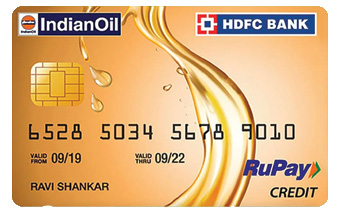
In short: Axis Fibe has the lower annual fee (none vs ₹500); both charge a 3.5% forex markup.
| Key facts | Axis Fibe | IndianOil HDFC |
|---|---|---|
| Annual fee | None | ₹500 |
| Joining fee | None | ₹500 |
| Annual fee waived | Not listed | On ₹50,000 annual spend |
| Top reward rate | Enjoy 3% Cashback on Food Delivery | 5% As Fuel Points At IndianOil |
| Base rewards | Enjoy 1% Cashback On All Other Spends | 1 Fuel Point For Every ₹150 |
| Lounge access | 1 airport lounge visit a quarter | Not listed |
| Forex markup | 3.5% | 3.5% |
From issuer benefit data, checked 24 Oct 2026. Milestones, welcome benefits and caps are in the full table below.
What you'd earn in a year
On ₹20,000 a month with ₹5,000 at each card's top rate, the two return about the same (₹3,600 vs ₹4,032 a year after fees).
| Spend profile | Axis Fibe | IndianOil HDFC |
|---|---|---|
| Reward value: top rate / base rate | 3% / 1% | 4.8% / 0.64% |
| ₹20,000 a month, all general spends | ₹2,400 | ₹1,536 |
| ₹20,000 a month, ₹5,000 of it at each card's top rate | ₹3,600 | ₹4,032 |
| Annual fee | None | ₹500 |
Estimates from the earn rates above, with stated cashback caps applied, before exclusions. Reward points are valued at the card's best listed redemption (often travel or vouchers via the bank's portal); cash-back on the statement is usually worth less. Annual fees may be waived on spend (see the table below).
Axis Bank Fibe Rupay Credit Card currently has more lounge detail available from the issuer data we index. Always confirm current fees and offers on the issuer’s site before you apply.
Last updated:
| Feature | Axis Bank Fibe Rupay Credit Card | Indianoil HDFC Bank Credit Card Rupay |
|---|---|---|
| Bank | Axis Bank | HDFC Bank |
| Network | Rupay | Rupay |
| Joining fee | Joining Fee - Nil | Joining Fee of Rs. 500 |
| Annual / renewal fee | Annual Fee - Nil | Renewal Fee of Rs.500 |
| Annual fee waiver | — | Spend Rs.50000 For Renewal Fee Waiver |
| Top reward rate | Enjoy 3% Cashback on Food Delivery | Earn 5% As Fuel Points At IndianOil |
| Base rate (other spends) | Enjoy 1% Cashback On All Other Spends | Earn 1 Fuel Point For Every Rs.150 |
| Lounge — domestic | 1 Complimentary Airport Lounge Access Per Quarter | — |
| Fuel surcharge waiver | 1% Fuel Surcharge Waiver | 1% Fuel Surcharge Waiver |
| Foreign currency markup | 3.50% - Foreign Currency Transactions | 3.50% - Foreign Currency Transactions |
Which is better for rewards?
Indianoil HDFC Bank Credit Card Rupay shows a higher headline earn signal in the reward summaries we index (Earn 5% As Fuel Points At IndianOil vs Enjoy 3% Cashback on Food Delivery). If you optimise for points or cashback on daily spend, start with that card’s reward bands — then model redemptions you actually use.
Which is better for travel?
Axis Bank Fibe Rupay Credit Card has richer lounge-related fields in our current benefits extract (domestic: 1 Complimentary Airport Lounge Access Per Quarter; international: —). Frequent flyers should still confirm guest access, visit limits and participating airports with the issuer.
Which has lower effective cost?
Renewal fee wording differs between issuers, so compare the “Annual / renewal fee” row directly: Axis Bank Fibe Rupay Credit Card — Annual Fee - Nil Indianoil HDFC Bank Credit Card Rupay — Renewal Fee of Rs.500 Then read waiver rules; a higher published fee can still be cheaper net if you usually clear spend-based waivers.
Who should pick Axis Bank Fibe Rupay Credit Card?
Consider Axis Bank Fibe Rupay Credit Card if you already bank with Axis Bank, and the fee, waiver and earn rows above line up with how you spend each month. Use CardChat on that card for deeper, personalised follow-ups.
Who should pick Indianoil HDFC Bank Credit Card Rupay?
Consider Indianoil HDFC Bank Credit Card Rupay if you already bank with HDFC Bank, and the fee, waiver and earn rows above line up with how you spend each month. Use CardChat on that card for deeper, personalised follow-ups.
Frequently Asked Questions
From the lounge fields in our benefit data: Axis Bank Fibe Rupay Credit Card — domestic: 1 Complimentary Airport Lounge Access Per Quarter; international: —. Indianoil HDFC Bank Credit Card Rupay — domestic: —; international: —. Guest rules, networks and visit caps change — confirm on the Axis Bank and HDFC Bank websites before you travel.
We could not parse both renewal fees reliably from our benefit feed for this pair. Compare the “Annual / renewal fee” row in the table above, then confirm on the Axis Bank and HDFC Bank websites.
On the first reward band we surface, Indianoil HDFC Bank Credit Card Rupay shows a stronger headline earn (Earn 5% As Fuel Points At IndianOil vs Enjoy 3% Cashback on Food Delivery). Category bonuses, caps and redemption value decide real-world returns — map this to where you actually spend.
Axis Bank Fibe Rupay Credit Card: Waiver wording not in our benefit extract — check Axis Bank. Indianoil HDFC Bank Credit Card Rupay: Spend Rs.50000 For Renewal Fee Waiver Spend thresholds and anniversary rules change; confirm the latest T&Cs.
Axis Bank Fibe Rupay Credit Card: 3.50% - Foreign Currency Transactions Indianoil HDFC Bank Credit Card Rupay: 3.50% - Foreign Currency Transactions Lower published foreign-currency markup is usually better for overseas and foreign-currency online spend; confirm the live rate and exclusions on the Axis Bank and HDFC Bank websites.