HDFC Bank UPI RuPay Credit Card vs IndianOil HDFC Bank Credit Card RuPay: Which is Better in 2026?
 vs
vs
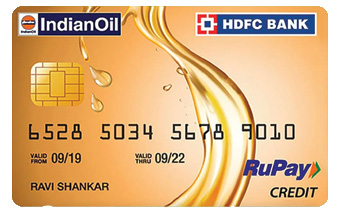
In short: HDFC UPI has the lower annual fee (₹99 vs ₹500); both charge a 3.5% forex markup.
| Key facts | HDFC UPI | IndianOil HDFC |
|---|---|---|
| Annual fee | ₹99 | ₹500 |
| Joining fee | ₹99 | ₹500 |
| Annual fee waived | On ₹25,000 annual spend | On ₹50,000 annual spend |
| Forex markup | 3.5% | 3.5% |
From issuer benefit data, checked 22 Oct 2026. Rewards, milestones and welcome benefits are in the full table below.
The Hdfc Bank Upi Rupay Credit Card and the Indianoil HDFC Bank Credit Card Rupay both operate on the Rupay network and are issued by HDFC Bank. While the Upi Rupay card offers cashback in the form of Cashpoints across various categories like dining, groceries, and utilities, the Indianoil card focuses on fuel-related rewards and fuel points. Both cards have similar foreign exchange markup fees but differ in joining fees, reward structures, and fee waiver thresholds.
Comparison notes and quick badges use AI, grounded in the benefit data shown in the table. Confirm details on each issuer’s site.
Last updated:
| Feature | Hdfc Bank Upi Rupay Credit Card | Indianoil HDFC Bank Credit Card Rupay |
|---|---|---|
| Bank | HDFC Bank | HDFC Bank |
| Network | Rupay | Rupay |
| Joining fee | Joining Fee of Rs.99 | Joining Fee of Rs. 500 |
| Annual / renewal fee | Renewal Fee of Rs.99 | Renewal Fee of Rs.500 |
| Annual fee waiver | Spend Rs.25000 For Renewal Fee Waiver | Spend Rs.50000 For Renewal Fee Waiver |
| Reward rate (headline) | 1% Cashpoints on Other Spends | Earn 1 Fuel Point For Every Rs.150 |
| Foreign currency markup | 3.50% - Foreign Currency Transactions | 3.50% - Foreign Currency Transactions |
Which is better for rewards?
For rewards, the Hdfc Bank Upi Rupay Credit Card provides cashback via Cashpoints with up to 3% on dining, groceries, and PayZapp transactions, capped at 500 points. In contrast, the Indianoil HDFC Bank Credit Card Rupay rewards primarily with Fuel Points, offering 5% fuel points on IndianOil fuel spends, groceries, and bill payments, but with lower redemption value per point for cashback. The Upi Rupay card's broader category coverage and straightforward cashback redemption make it more versatile for general spending, while the Indianoil card is specialized for fuel and related expenses. Overall, rewards value depends on your spending pattern, with the Upi Rupay card better for varied categories and Indianoil better for fuel-centric users.
Which is better for travel?
Neither card offers specific travel-related benefits such as lounge access or travel milestones. Both cards have the same forex markup fee of 3.5%, which is on the higher side for foreign currency transactions. Therefore, neither card stands out for travel perks or cost efficiency on international spends.
Which has lower effective cost?
The Hdfc Bank Upi Rupay Credit Card has a lower joining and renewal fee of Rs.99 compared to Rs.500 for the Indianoil HDFC Bank Credit Card Rupay. Fee waivers require Rs.25,000 spend for the Upi Rupay card and Rs.50,000 for the Indianoil card, making the former easier to maintain fee-free status. Both cards have similar balance transfer charges and no disclosed fuel surcharge waivers except the Indianoil card's 1% fuel surcharge waiver starting October 2025. Overall, the Upi Rupay card is more cost-effective for users with moderate spends.
Reward Redemption Flexibility
The Hdfc Bank Upi Rupay Credit Card allows redemption of Cashpoints against statement balance, travel bookings, and product vouchers at a fixed rate of Rs.0.25 per point, providing flexibility across categories. The Indianoil card's Fuel Points can be redeemed for cashback at Rs.0.20 per point or for free fuel at Rs.0.96 per point, making it more valuable for fuel redemptions but less flexible for other uses.
Who should pick Hdfc Bank Upi Rupay Credit Card?
Consider Hdfc Bank Upi Rupay Credit Card if you want a low-cost credit card with cashback rewards across multiple everyday categories like dining, groceries, and utilities. It is suitable for users looking for straightforward cashback redemption and a lower fee waiver threshold. This card is also a practical choice if you prefer a card with a lower joining and renewal fee and do not prioritize fuel-specific benefits.
Who should pick Indianoil HDFC Bank Credit Card Rupay?
Consider Indianoil HDFC Bank Credit Card Rupay if you frequently spend on fuel at IndianOil outlets and want to maximize fuel-related rewards. This card is tailored for users who can benefit from fuel points that can be redeemed for free fuel or cashback, especially if you also spend on groceries and bill payments. It is better suited for those willing to pay a higher joining fee and meet a higher spend threshold for fee waiver in exchange for specialized fuel rewards.
Frequently Asked Questions
The Hdfc Bank Upi Rupay Credit Card has a joining fee of Rs.99, while the Indianoil HDFC Bank Credit Card Rupay charges Rs.500 as joining fee.
No, neither card offers domestic or international lounge access benefits.
Both cards charge a forex markup fee of 3.50% on foreign currency transactions.
The Hdfc Bank Upi Rupay Credit Card waives the Rs.99 renewal fee if you spend Rs.25,000, whereas the Indianoil card waives the Rs.500 renewal fee if you spend Rs.50,000.
The Indianoil HDFC Bank Credit Card Rupay is better for fuel-related rewards, offering 5% fuel points on IndianOil fuel spends and a 1% fuel surcharge waiver starting October 2025.
Only the Hdfc Bank Upi Rupay Credit Card explicitly allows redemption of Cashpoints for travel bookings through SmartBuy; the Indianoil card does not mention travel redemption options.