Hsbc Travelone Credit Card vs Standard Chartered Rewards Visa Platinum Credit Card: Which is Better in 2026?
 vs
vs
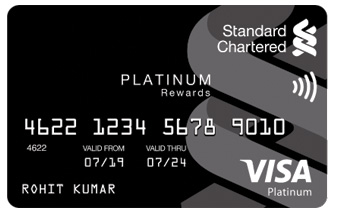
When comparing the Hsbc Travelone Credit Card and the Standard Chartered Rewards Visa Platinum Credit Card, key differences emerge in fees, rewards structure, and travel benefits. The Hsbc Travelone card focuses on travel-related rewards and offers complimentary lounge access, while the Standard Chartered card provides a no-fee structure with rewards primarily on fuel and dining.
Comparison notes and quick badges use AI, grounded in the benefit data shown in the table. Confirm details on each issuer’s site.
Last updated:
| Feature | Hsbc Travelone Credit Card | Standard Chartered Rewards Visa Platinum Credit Card |
|---|---|---|
| Bank | HSBC | Standard Chartered Bank |
| Network | MasterCard | Visa |
| Joining fee | Joining Fee - Rs.4999 | Joining Fee - Zero |
| Annual / renewal fee | Annual Fees - Rs.4999 | Annual Fee - Zero |
| Annual fee waiver | Spend Rs.8 Lakhs For Renewal Fee Waiver | Spend Rs.500 For Onetime Fee Waiver |
| Reward rate (headline) | Earn 4 Reward Points on Rs.100 Spent on Flights | Earn 5X Reward Points on Fuel |
| Lounge — domestic | 6 Complimentary Domestic Airport Lounge Access Per Year | — |
| Lounge — international | 4 Complimentary International Lounge Access Per Year | — |
| Welcome benefit | Rs.1000 Cashback As Welcome Rewards | — |
| Milestone benefit | Earn 3000 Reward Points on Spend of Rs.1 Lakhs; Earn 10000 Reward Points on Spend of Rs.1200000 | — |
| Foreign currency markup | 3.5% - Foreign Currency Transactions | 3.5% - Foreign Currency Transactions |
Which is better for rewards?
The Hsbc Travelone Credit Card is more advantageous for rewards, particularly for travel enthusiasts, as it offers 4 Reward Points on flights and 6X on hotels. In contrast, the Standard Chartered Rewards Visa Platinum Credit Card provides 5X Reward Points on fuel and dining, but its overall rewards structure is less versatile for various spending categories. Therefore, for those who prioritize travel rewards, the Hsbc Travelone card is the better option.
Which is better for travel?
For travelers, the Hsbc Travelone Credit Card stands out due to its complimentary lounge access both domestically and internationally, making it a solid choice for frequent flyers. The Standard Chartered Rewards Visa Platinum Credit Card lacks any lounge access benefits, which may be a drawback for those who travel often. Hence, if travel perks are a priority, the Hsbc Travelone card is preferable.
Which has lower effective cost?
The Standard Chartered Rewards Visa Platinum Credit Card has a significant advantage with no joining or annual fees, making it a cost-effective choice for users. In contrast, the Hsbc Travelone Credit Card charges a joining fee and an annual fee, which can be waived with a substantial spend. Therefore, for those looking to minimize costs, the Standard Chartered card is the better option.
Who should pick Hsbc Travelone Credit Card?
Consider Hsbc Travelone Credit Card if you frequently travel and want to earn rewards on travel-related expenses while enjoying lounge access. This card is ideal for those who can meet the spending requirements to maximize the benefits.
Who should pick Standard Chartered Rewards Visa Platinum Credit Card?
Consider Standard Chartered Rewards Visa Platinum Credit Card if you prefer a no-fee card that rewards you for everyday spending, especially on fuel and dining. This card is suitable for beginners or those who want to avoid annual fees altogether.
Frequently Asked Questions
The Hsbc Travelone Credit Card has a joining fee of Rs.4999, while the Standard Chartered Rewards Visa Platinum Credit Card has no joining fee.
Yes, the Hsbc Travelone Credit Card offers 6 complimentary domestic and 4 international lounge accesses per year, while the Standard Chartered card does not provide any lounge access.
Both cards have a forex markup of 3.5% on foreign currency transactions.
For the Hsbc Travelone Credit Card, you can waive the annual fee by spending Rs.8 Lakhs. The Standard Chartered Rewards Visa Platinum Credit Card has a one-time fee waiver with a spend of Rs.500.