IndianOil Axis Bank Credit Card vs IndianOil HDFC Bank Credit Card RuPay: Which is Better in 2026?
 vs
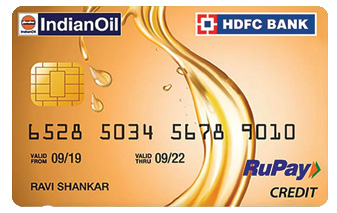
In short: both charge a ₹500 annual fee; both charge a 3.5% forex markup.
| Key facts | Axis IndianOil | IndianOil HDFC |
|---|---|---|
| Annual fee | ₹500 | ₹500 |
| Joining fee | ₹500 | ₹500 |
| Annual fee waived | On ₹3.5 lakh annual spend | On ₹50,000 annual spend |
| Forex markup | 3.5% | 3.5% |
From issuer benefit data, checked 22 Oct 2026. Rewards, milestones and welcome benefits are in the full table below.
The Indianoil Axis Bank Credit Card and the Indianoil HDFC Bank Credit Card Rupay both cater to fuel spenders with Rupay network support and similar joining and renewal fees. While the Axis Bank card offers accelerated rewards on IOCL fuel outlets and online shopping, the HDFC Bank card focuses on earning fuel points with higher value redemption options and additional rewards on groceries and bill payments. Both cards have a 3.5% forex markup and a 1% fuel surcharge waiver, but their reward structures and fee waiver criteria differ.
Comparison notes and quick badges use AI, grounded in the benefit data shown in the table. Confirm details on each issuer’s site.
Last updated:
| Feature | Indianoil Axis Bank Credit Card | Indianoil HDFC Bank Credit Card Rupay |
|---|---|---|
| Bank | Axis Bank | HDFC Bank |
| Network | Rupay | Rupay |
| Joining fee | Joining Fee of Rs.500 | Joining Fee of Rs. 500 |
| Annual / renewal fee | Second Year Onwards Annual Fee of Rs. 500 | Renewal Fee of Rs.500 |
| Annual fee waiver | Spend Rs.3.5 Lakhs For Annual Fee Waiver | Spend Rs.50000 For Renewal Fee Waiver |
| Reward rate (headline) | Earn 1 Rewards Points For Every Rs.100 | Earn 1 Fuel Point For Every Rs.150 |
| Welcome benefit | Welcome Benefit - Earn 100% valueback on Fuel | — |
| Foreign currency markup | 3.5% - Foreign Currency Transactions | 3.50% - Foreign Currency Transactions |
Which is better for rewards?
The HDFC Bank Indianoil card provides a more rewarding structure for fuel and everyday spends, offering 5% fuel points on IndianOil fuel, groceries, and bill payments, which can be redeemed at a high value of Rs.0.96 per fuel point for free fuel. In contrast, the Axis Bank card offers 1 reward point per Rs.100 spent with accelerated points on IOCL fuel and online shopping but lacks the higher percentage rewards and flexible redemption options of the HDFC card. Therefore, for maximizing rewards especially on fuel and daily expenses, the HDFC Bank card is better positioned.
Which is better for travel?
Neither card offers dedicated travel benefits such as lounge access or travel concierge services, and both have the same forex markup fee of 3.5%. Since neither card has travel-specific perks, they are evenly matched for travel-related usage beyond the standard foreign transaction fee.
Which has lower effective cost?
Both cards have a joining and renewal fee of Rs. 500. The Axis Bank card waives the annual fee on spending Rs.3.5 lakhs, whereas the HDFC Bank card requires a lower spend of Rs.50,000 for renewal fee waiver, making it easier to avoid fees. Additionally, the Axis Bank card charges 2.5% on cash withdrawals while the HDFC Bank card's cash advance fees are not detailed here and should be verified. Overall, the HDFC Bank card offers a simpler and lower threshold for fee waiver, making it more cost-effective for moderate spenders.
Reward Redemption Value
The HDFC Bank card's fuel points can be redeemed for free fuel at a high rate of Rs.0.96 per point, which provides tangible value for frequent fuel buyers. The Axis Bank card offers redemption against shopping and travel vouchers but does not specify a direct fuel redemption rate, making the HDFC card more attractive for fuel-centric rewards.
Fee Waiver Threshold
The Axis Bank card requires a significantly higher annual spend of Rs.3.5 lakhs to waive the renewal fee compared to Rs.50,000 on the HDFC Bank card. This makes the HDFC card more accessible for users who want to avoid fees without very high spending.
Who should pick Indianoil Axis Bank Credit Card?
Consider Indianoil Axis Bank Credit Card if you prefer a straightforward rewards program with accelerated points on IOCL fuel and online shopping, and if you tend to spend heavily enough to waive the annual fee at Rs.3.5 lakhs. It is suitable for users who want a basic rewards structure linked to fuel and online spends with no card replacement charges.
Who should pick Indianoil HDFC Bank Credit Card Rupay?
Consider Indianoil HDFC Bank Credit Card Rupay if you want a card that offers higher rewards on fuel, groceries, and bill payments with flexible redemption options including free fuel. It is better for users looking for easier fee waiver criteria and more value from their fuel points, especially if you spend regularly on IndianOil fuel and everyday categories.
Frequently Asked Questions
Both the Indianoil Axis Bank Credit Card and the Indianoil HDFC Bank Credit Card Rupay have a joining fee of Rs. 500.
The Axis Bank card waives the annual fee if you spend Rs. 3.5 lakhs in a year, while the HDFC Bank card waives the renewal fee if you spend Rs. 50,000.
Yes, both cards provide a 1% fuel surcharge waiver on fuel spends at IndianOil outlets.
Both cards charge a forex markup fee of 3.5% on foreign currency transactions.
The HDFC Bank card offers 5% fuel points on IndianOil fuel spends with a higher redemption value, making it more rewarding for fuel purchases compared to the Axis Bank card's accelerated reward points.
No, neither card offers domestic or international lounge access benefits.