HDFC Bank MoneyBack Credit Card vs Sbi Cards Simplysave Visa Platinum Credit Card: Which is Better in 2026?
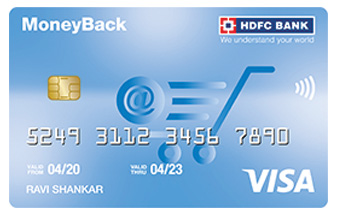 vs
vs
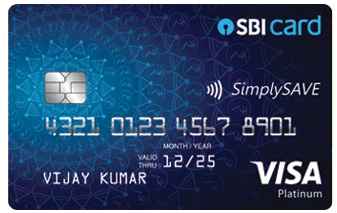
The HDFC Bank MoneyBack Credit Card and the SBI Cards Simplysave Visa Platinum Credit Card both offer rewards primarily through points, but differ in fee structure, reward categories, and redemption options. HDFC's card has a lower joining fee and offers accelerated points on online spends, while SBI's card provides higher reward points on dining, movies, and grocery spends. Both cards have similar forex markup charges and fuel surcharge waivers, but differ in renewal fee waiver thresholds and welcome benefits.
Comparison notes and quick badges use AI, grounded in the benefit data shown in the table. Confirm details on each issuer’s site.
Last updated:
| Feature | HDFC Bank MoneyBack Credit Card | Sbi Cards Simplysave Visa Platinum Credit Card |
|---|---|---|
| Bank | HDFC Bank | SBI Cards |
| Network | Visa | Visa |
| Joining fee | Joining Fee of Rs.500 | — |
| Annual / renewal fee | Renewal Fee of Rs.500 | Annual Fee of Rs.499 |
| Annual fee waiver | Spend Rs.50000 For Renewal Fee Waiver | Spend Rs.1 Lakhs For Waiver of Renewal Fee |
| Reward rate (headline) | Earn 2 Reward Points Per Rs.200 | Enjoy 10 Reward Points on Every Rs. 150 Spent at Dining |
| Welcome benefit | Welcome Benefit - 500 CashPoints | Earn 2000 bonus Reward Points |
| Foreign currency markup | 3.50% - Foreign Currency Transactions | 3.5% - Foreign Currency Transactions |
Which is better for rewards?
The SBI Cards Simplysave Visa Platinum Credit Card offers more rewarding points on specific categories such as dining, movies, and grocery, making it attractive for category-focused spenders. It also provides a higher welcome bonus of 2000 points compared to HDFC MoneyBack's 500 CashPoints. However, HDFC's card accelerates rewards on online spends and offers multiple redemption options including travel, cashback, and product catalogues. Overall, SBI's card is better for category rewards, while HDFC offers more versatile redemption.
Which is better for travel?
Both cards charge a similar forex markup fee of 3.5%, which is standard for many Indian credit cards. Neither card offers domestic or international lounge access, so travel convenience benefits are limited. HDFC's card allows redemption of points for travel at a rate of 1 Reward Point = Rs.0.20 or 0.25 airmiles, which may appeal to occasional travelers. SBI's card does not specify travel-related redemptions but does offer a rewards catalogue. Hence, neither card stands out strongly for travel perks.
Which has lower effective cost?
HDFC Bank MoneyBack Credit Card has a joining and renewal fee of Rs.500 each, with a renewal fee waiver on spending Rs.50,000 quarterly. SBI Simplysave has no joining fee but charges an annual fee of Rs.499, waived only if Rs.1 lakh is spent annually. For users with moderate spending, HDFC's lower waiver threshold and joining fee may be more cost-effective. Both cards offer a 1% fuel surcharge waiver, adding some savings on fuel expenses.
Reward Redemption Flexibility
HDFC MoneyBack Credit Card offers multiple redemption options including travel bookings, cashback against statement balance, airmiles conversion, and product catalogue redemption, providing greater flexibility. SBI Simplysave primarily offers redemption through a rewards catalogue and statement balance cashback at a fixed conversion rate.
Fee Waiver Thresholds
HDFC requires a quarterly spend of Rs.50,000 to waive the renewal fee, which may be easier to achieve for some users compared to SBI Simplysave's Rs.1 lakh annual spend requirement. This difference impacts the effective cost of holding the card.
Who should pick HDFC Bank MoneyBack Credit Card?
Consider HDFC Bank MoneyBack Credit Card if you prefer a lower joining fee and want accelerated rewards on online spends. It is suitable for users who can meet a quarterly spend of Rs.50,000 to waive the renewal fee and appreciate flexible redemption options including travel and cashback. This card is a practical choice for moderate spenders looking for consistent rewards without a high annual fee burden.
Who should pick Sbi Cards Simplysave Visa Platinum Credit Card?
Consider SBI Cards Simplysave Visa Platinum Credit Card if your spending is concentrated in dining, movies, and grocery categories where you can earn 10 reward points per Rs.150 spent. It is ideal for users who can meet the higher annual spend of Rs.1 lakh to waive the renewal fee and want a larger welcome bonus. This card suits category-focused spenders seeking higher rewards on lifestyle expenses.
Frequently Asked Questions
HDFC MoneyBack Credit Card charges Rs.500 as joining and renewal fees with a waiver on renewal if Rs.50,000 is spent quarterly. SBI Simplysave has no joining fee but charges Rs.499 annually, waived if Rs.1 lakh is spent annually.
SBI Simplysave Visa Platinum Credit Card offers 10 reward points per Rs.150 spent on dining, movies, departmental stores, and grocery, which is higher than HDFC MoneyBack's flat 2 points per Rs.200.
Yes, both cards offer a 1% fuel surcharge waiver on fuel transactions.
Both cards charge a forex markup fee of 3.5% on foreign currency transactions.
HDFC MoneyBack Credit Card offers 500 CashPoints as a welcome benefit, while SBI Simplysave provides 2000 bonus reward points upon meeting the minimum spend criteria.
HDFC MoneyBack Credit Card allows redemption for travel at 1 Reward Point = Rs.0.20 or 0.25 airmiles. SBI Simplysave does not specify travel redemption options.