HSBC Visa Platinum Credit Card vs Lic Axis Bank Visa Signature Credit Card: Which is Better in 2026?
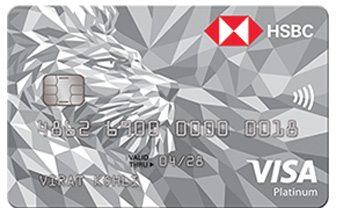 vs
vs
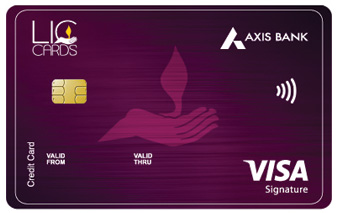
The HSBC Visa Platinum Credit Card and the Lic Axis Bank Visa Signature Credit Card both offer no joining or renewal fees and have a forex markup of 3.5%. HSBC focuses on travel-related rewards with accelerated points on car rentals, hotels, and flights, while Axis Bank’s card provides rewards primarily on LIC premium payments and general spends. Axis Bank also offers domestic airport lounge access, which HSBC does not provide.
Comparison notes and quick badges use AI, grounded in the benefit data shown in the table. Confirm details on each issuer’s site.
Last updated:
| Feature | HSBC Visa Platinum Credit Card | Lic Axis Bank Visa Signature Credit Card |
|---|---|---|
| Bank | HSBC | Axis Bank |
| Network | Visa | Visa |
| Joining fee | Joining Fee - Nil | Joining Fee - Nil |
| Annual / renewal fee | Renewal Fees - Nil | Annual Fee - Nil |
| Reward rate (headline) | Earn 2X Reward Points on Car Rentals | Earn 1 Reward Points Per Rs.100 |
| Lounge — domestic | — | 2 Complimentary Airport Lounge Access Per Quarter |
| Welcome benefit | Earn 2000 Bonus Reward Points | — |
| Foreign currency markup | 3.5% - Foreign Currency Transactions | 3.50% - Foreign Currency Transactions |
Which is better for rewards?
The HSBC Visa Platinum Credit Card is better suited for users looking to maximize rewards on travel and hospitality categories, offering up to 6X reward points on hotels and 4X on flights, along with 2X points on car rentals. In contrast, the Lic Axis Bank Visa Signature Credit Card rewards LIC premium payments and general spends at a lower rate of 2 points per Rs.100 and 1 point per Rs.100 respectively, with no special category accelerators. Therefore, HSBC provides more lucrative rewards for travel-focused users, while Axis Bank’s card is more niche for LIC premium payers.
Which is better for travel?
For travel benefits, HSBC offers no complimentary airport lounge access, whereas the Lic Axis Bank Visa Signature Credit Card provides 2 complimentary domestic airport lounge visits per quarter. However, HSBC’s card rewards travel spends more generously, including flights and hotels. Users prioritizing lounge access during domestic travel may prefer Axis Bank’s offering, but those focused on earning higher travel rewards should consider HSBC’s card.
Which has lower effective cost?
Both cards have no joining or renewal fees, making them cost-effective choices in terms of annual charges. The forex markup is identical at 3.5% for both cards, so foreign currency transaction costs are comparable. Axis Bank’s card details late payment fees, which can be substantial, while HSBC’s card information on late fees is not provided here and should be checked on the issuer’s site. Overall, both cards are similarly priced with no annual fees, but potential penalty costs should be verified.
Lounge Access
The Lic Axis Bank Visa Signature Credit Card offers 2 complimentary domestic airport lounge visits per quarter, which the HSBC Visa Platinum Credit Card does not provide. This can be a significant benefit for frequent domestic travelers seeking comfort during airport wait times.
Reward Redemption Options
HSBC’s card supports reward point redemption with various airline and hotel loyalty programs including Qatar Airways, British Airways, and Wyndham Hotels, providing flexible travel redemption options. The Axis Bank card allows redemption against e-vouchers and gift cards, which may appeal more to shopping-focused users.
Who should pick HSBC Visa Platinum Credit Card?
Consider HSBC Visa Platinum Credit Card if you want to earn higher reward points on travel-related spends such as hotels, flights, and car rentals. It is also suitable if you prefer a card with no joining or renewal fees and want to redeem points with multiple airline and hotel loyalty programs. This card is ideal for travelers looking to maximize rewards rather than lounge access.
Who should pick Lic Axis Bank Visa Signature Credit Card?
Consider Lic Axis Bank Visa Signature Credit Card if you frequently pay LIC premiums and want to earn accelerated rewards on those payments. It is also a good option if you value complimentary domestic airport lounge access and prefer a card with no joining or renewal fees. This card suits users who want basic rewards on general spends along with some travel convenience through lounge access.
Frequently Asked Questions
Both HSBC Visa Platinum Credit Card and Lic Axis Bank Visa Signature Credit Card have no joining or renewal fees.
HSBC Visa Platinum Credit Card offers higher reward points on travel spends including hotels, flights, and car rentals, making it better for travel rewards.
Yes, the Lic Axis Bank Visa Signature Credit Card provides 2 complimentary domestic airport lounge accesses per quarter, while HSBC Visa Platinum does not offer lounge access.
Both cards charge a forex markup fee of 3.5% on foreign currency transactions.
HSBC Visa Platinum Credit Card offers 2000 bonus reward points as a welcome benefit, whereas Lic Axis Bank Visa Signature Credit Card does not have any welcome benefits listed.
HSBC Visa Platinum Credit Card allows redemption of reward points for airline miles with partners like Qatar Airways and British Airways. The Axis Bank card offers redemption mainly against e-vouchers and gift cards.