HSBC Visa Platinum Credit Card vs SBI Card Visa Pulse: Which is Better in 2026?
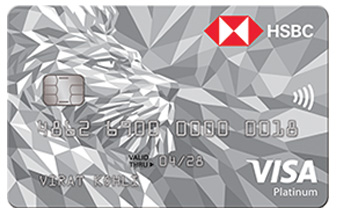 vs

In short: HSBC has the lower annual fee (none vs ₹1,499); both charge a 3.5% forex markup.
| Key facts | HSBC | SBI Pulse |
|---|---|---|
| Annual fee | None | ₹1,499 |
| Joining fee | None | Not listed |
| Annual fee waived | Not listed | On ₹2 lakh annual spend |
| Lounge access | Not listed | 8 airport lounge visits a year + Priority Pass |
| Forex markup | 3.5% | 3.5% |
From issuer benefit data, checked 22 Oct 2026. Rewards, milestones and welcome benefits are in the full table below.
The HSBC Visa Platinum Credit Card and the Sbi Card Visa Pulse both offer Visa network benefits but cater to different user preferences. HSBC’s card focuses on travel-related reward points and offers a welcome bonus of 2000 reward points, while SBI Card Visa Pulse emphasizes lifestyle rewards with higher points on categories like dining and wellness, plus complimentary lounge access. Fee structures differ notably, with HSBC charging no joining or renewal fees, whereas SBI Card Visa Pulse has a renewal fee that can be waived with sufficient annual spending.
Comparison notes and quick badges use AI, grounded in the benefit data shown in the table. Confirm details on each issuer’s site.
Last updated:
| Feature | HSBC Visa Platinum Credit Card | Sbi Card Visa Pulse |
|---|---|---|
| Bank | HSBC | SBI Cards |
| Network | Visa | Visa |
| Joining fee | Joining Fee - Nil | — |
| Annual / renewal fee | Renewal Fees - Nil | Annual Fee of Rs.1499 |
| Annual fee waiver | — | Spend Rs.2 Lakhs For Waiver of Renewal Fee |
| Reward rate (headline) | Earn 2 Reward Points per Rs.150 | Earn 2 Reward Points per Rs.100 |
| Lounge — domestic | — | 8 Complimentary Airport Lounge Access Per Year |
| Lounge — international | — | Complimentary Priority Pass Membership worth US $99 |
| Welcome benefit | Earn 2000 Bonus Reward Points | Get a Noise ColorFit Pulse 2 Max Smart Watch worth Rs.5999 |
| Foreign currency markup | 3.5% - Foreign Currency Transactions | 3.5% - Foreign Currency Transactions |
Which is better for rewards?
When it comes to rewards, the Sbi Card Visa Pulse provides a more versatile and higher earning potential across various lifestyle categories such as dining, movies, sports, and wellness, offering 10 reward points per Rs.100 spent in these categories. In contrast, the HSBC Visa Platinum Credit Card offers reward points focused on travel-related spends like flights, hotels, and car rentals, with multipliers up to 6X. Additionally, HSBC provides a welcome benefit of 2000 bonus reward points and options to redeem points with multiple airline and hotel partners. Overall, SBI Card Visa Pulse is better suited for diverse everyday spends, while HSBC is more travel-centric.
Which is better for travel?
For travel benefits, the Sbi Card Visa Pulse stands out with 8 complimentary domestic airport lounge accesses per year and an international Priority Pass membership worth US $99, which can enhance the travel experience significantly. The HSBC Visa Platinum Credit Card does not list any complimentary lounge access benefits. Both cards have the same forex markup fee of 3.5%, which is relatively high and should be considered by frequent international travelers. HSBC’s card rewards travel spends more directly through higher reward points on flights and hotels, but SBI’s lounge access and Priority Pass membership add tangible travel convenience.
Which has lower effective cost?
Regarding fees, the HSBC Visa Platinum Credit Card has an advantage with no joining or renewal fees, making it a low-cost option for those who want to avoid annual charges. On the other hand, the Sbi Card Visa Pulse charges a renewal fee of Rs.1499, which can be waived if the cardholder spends Rs.2 lakhs annually. This fee waiver condition requires a moderate level of annual spending to avoid costs. Both cards have a 3.5% forex markup fee, which is standard but on the higher side for foreign currency transactions. Fuel surcharge waiver is only mentioned for HSBC, up to Rs.250, which might benefit users who spend on fuel.
Reward Focus
HSBC Visa Platinum Credit Card targets travel enthusiasts with higher reward points on flights, hotels, and car rentals, plus multiple airline and hotel redemption options. Sbi Card Visa Pulse emphasizes lifestyle categories like dining, wellness, and entertainment with elevated reward points, catering to everyday spending habits.
Travel Lounge Access
Sbi Card Visa Pulse offers significant travel perks with 8 complimentary domestic airport lounge visits annually and an international Priority Pass membership, enhancing airport experiences. HSBC Visa Platinum Credit Card does not provide lounge access benefits.
Fee Structure and Waivers
HSBC Visa Platinum Credit Card has no joining or renewal fees, making it cost-effective upfront and annually. Sbi Card Visa Pulse charges a renewal fee of Rs.1499, which can be waived with Rs.2 lakhs annual spend, requiring users to maintain a certain spend level to avoid fees.
Who should pick HSBC Visa Platinum Credit Card?
Consider HSBC Visa Platinum Credit Card if you prefer a no-fee credit card with a focus on travel-related reward points and want flexibility in redeeming points with various airline and hotel partners. It is also suitable if you value a welcome bonus in reward points and a small fuel surcharge waiver. This card is a practical choice for users looking for straightforward benefits without annual fees.
Who should pick Sbi Card Visa Pulse?
Consider Sbi Card Visa Pulse if you want a credit card that rewards diverse lifestyle spends such as dining, wellness, movies, and sports with higher reward points. It is also a good pick if you value complimentary airport lounge access domestically and internationally through Priority Pass. This card suits users who are comfortable meeting an annual spend threshold to waive the renewal fee and want tangible travel convenience benefits alongside lifestyle rewards.
Frequently Asked Questions
No, the HSBC Visa Platinum Credit Card does not charge any joining or renewal fees.
The Sbi Card Visa Pulse has a renewal fee of Rs.1499, which can be waived if the cardholder spends Rs.2 lakhs annually.
Yes, both HSBC Visa Platinum Credit Card and Sbi Card Visa Pulse charge a forex markup fee of 3.5% on foreign currency transactions.
Sbi Card Visa Pulse offers 8 complimentary domestic airport lounge accesses per year and an international Priority Pass membership. HSBC Visa Platinum Credit Card does not offer lounge access benefits.
HSBC Visa Platinum Credit Card offers 4X points on flights, 6X on hotels, and 2X on car rentals. Sbi Card Visa Pulse offers 10 reward points per Rs.100 spent on chemist, dining, movies, sports, and wellness categories.
Yes, HSBC Visa Platinum Credit Card offers 2000 bonus reward points as a welcome benefit, while Sbi Card Visa Pulse offers a Noise ColorFit Pulse 2 Max Smart Watch worth Rs.5999.